

DST News
Drone Safety Team Elects New Co-Chair at Plenary
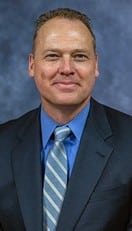
The Drone Safety Team has elected Eric Bergesen of UPS Flight Forward as its new industry co-chair, completing a leadership transition in the joint industry-government team.
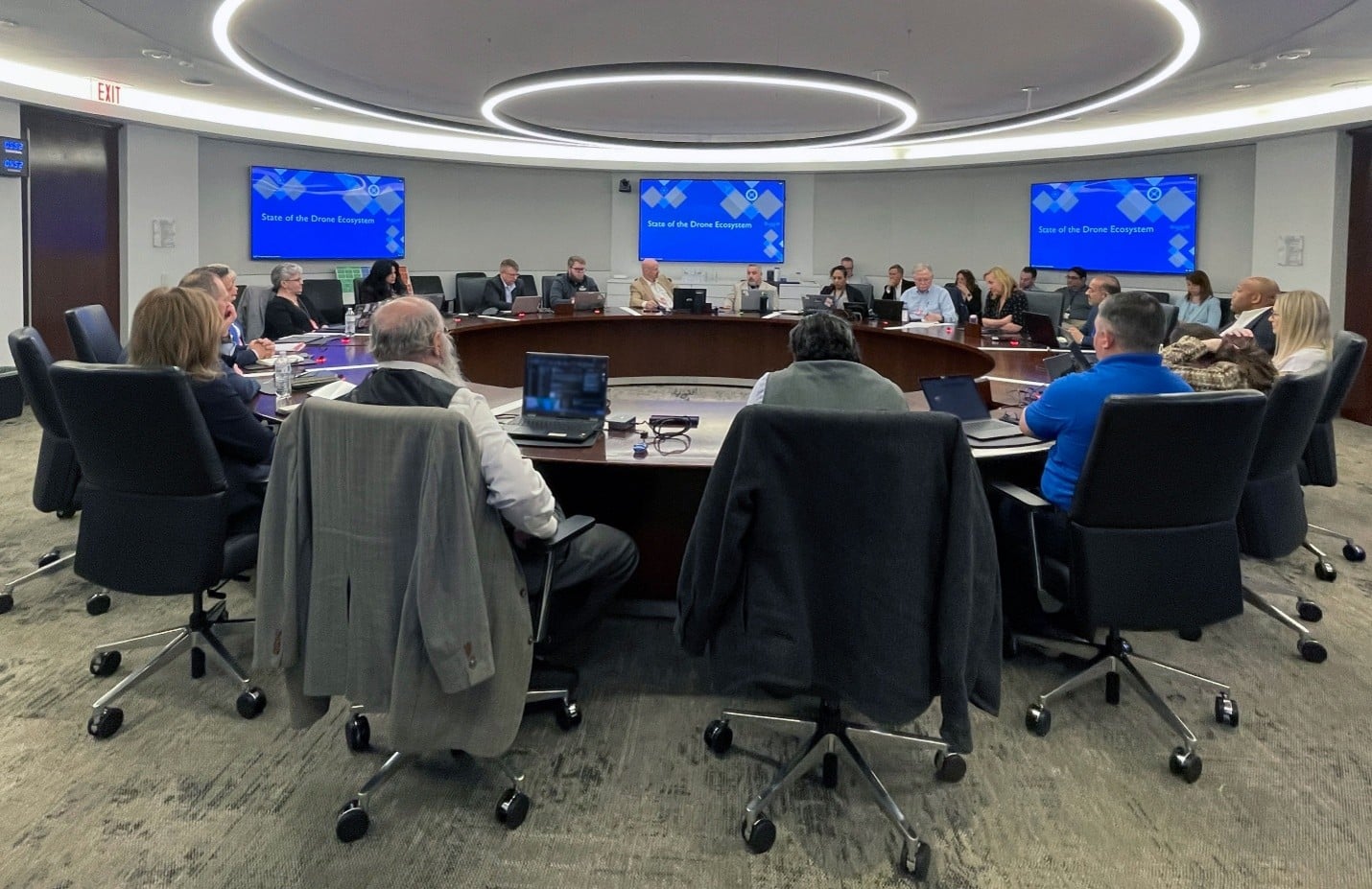
"I look forward to working with this group and leveraging all the resources we have here on both the industry side and the FAA side," Bergesen said after voting members of the DST selected him March 27. The vote occurred at the team's first plenary of 2026, which the Federal Aviation Administration hosted at its headquarters in Washington, D.C.
Bergesen succeeds Dallas Brooks of the Alphabet-owned drone delivery company Wing as industry co-chair. Bergesen will lead the DST with Joe Morra of the FAA's Emerging Technologies Division, who replaced Jeffrey Vincent as the government co-chair in January.
Bergesen is a pilot by trade and has more than 35 years of experience in aviation. He joined UPS in 2014 and helped establish the drone subsidiary UPS Flight Forward in 2019 as part of the FAA's Integration Pilot Program. As director of operations at UPS Flight Forward, Bergesen has overseen more than 20,000 drone flights, mostly in the healthcare sector.
He echoed Brooks' observation at the plenary about the excitement of working in the innovative drone industry. "You wake up every day, and there's a good chance that you're going to try to do something that hasn't been done before," Bergesen said.
UPS Flight Forward received the FAA's first Standard Part 135 certification for drone delivery and was among the first to gain approval for flights beyond visual line of sight. UPS Flight Forward also created a voluntary safety management system (SMS) for drone operations.
"We weave SMS principles throughout our organization at a scale and baseline that make sense for the complexity of our operations," Bergesen told the DST.
A DST working group is finalizing an SMS toolkit for drone operators and discussed it at the plenary. The toolkit, which will include a resource for artificial intelligence and machine learning in drones, will be published to the DST website.
In advocating for voluntary drone safety management systems, working group chair Nancy Graham reminded plenary participants of the tiered structure that the group previously proposed. She said the "escalator approach" for drone providers to adopt SMS principles considers the complexity of the operations in low, medium and high tiers.
The working group developed 13 case studies to capture the different experiences of pilots and companies in the drone community.
A separate working group on drone safety data also presented its findings at the plenary. As chair, Dr. Noran Abraham highlighted three challenges surrounding the data from years of drone operations: a lack of standard terminology; unclear requirements on how and where to report the data; and ambiguity about how drone safety events are tracked and investigated. She noted that the working group has produced a "Guidebook for Drone Safety-Related Terms" and recommendations for how to standardize definitions.
Working group artifacts can be found in the DST library.
The DST plenary also featured presentations by representatives from the other industry-government safety teams — the Commercial Aviation Safety Team (CAST), General Aviation Joint Safety Committee (GAJSC), and U.S. Helicopter Safety Team (USHST). All fall under the umbrella of the U.S. Aviation Safety Team, which added the DST to the mix in fall 2025.
CAST and the GAJSC were the first to be established in 1997, followed by the USHST in 2013. "Nobody needs to reinvent the wheel," said Lee Roskop, an FAA member of the USHST. "There's an approach that CAST established."
Aviation Safety Information Analysis and Sharing (ASIAS) representatives from the FAA also briefed the DST about their system and demonstrated it at the plenary.
As DST co-chair, Bergesen said ASIAS presents a great future opportunity to analyze drone data and proactively mitigate the safety risks that ASIAS reveals. He also expressed a desire to work with the GAJSC and USHST to distribute joint safety messages and host webinars.
Expanding the DST ranks is also a priority for Bergesen. "We should identify who the nonparticipants are in our industry and reach out to them," he said. "The more people we can bring in, the better support we have to broaden the horizons of the safety team."